
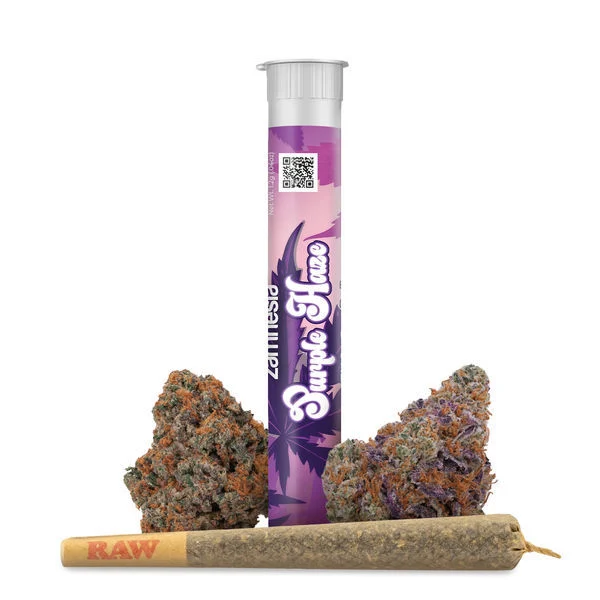
Purple Haze
Purple Haze is a legendary sativa-dominant cannabis strain known for its vibrant purple hues, psychedelic effects, and sweet, earthy flavor profile. Here’s a breakdown of its key characteristics:
Genetics & Background of Purple Haze
-
Lineage: Believed to be a cross between Hazes (a classic sativa) and Purples Thai or other purple indica varieties.
-
THC Content: Typically ranges between 15% – 20%, with some phenotypes testing higher.
-
CBD Content: Usually low (<1%).
Appearance & Aroma
-
Color: Deep purple buds (due to anthocyanin pigments) mixed with bright orange pistils and a frosty trichome layer.
-
Smell: Sweet, berry-like aroma with earthy, woody, and sometimes spicy notes.
-
Taste: Fruity, floral, and slightly skunky with a smooth smoke.
Effects & Uses
-
High: Uplifting, euphoric, and cerebral—classic sativa effects that enhance creativity, focus, and energy. Some users report mild psychedelic or trippy sensations.
-
Medical Benefits: May help with depression, stress, fatigue, and mild pain due to its mood-boosting properties.
-
Drawbacks: Can cause dry mouth, dry eyes, or anxiety in high doses (especially for those sensitive to sativas).
Growing Info
-
Difficulty: Moderate (requires some experience).
-
Flowering Time: ~9-11 weeks (longer than many hybrids).
-
Yield: Moderate to high, thrives in warm, dry climates (outdoors) or controlled indoor setups.
-
Notable Traits: The purple coloring is more pronounced in cooler temperatures during flowering.
Cultural Impact
Purple Hazes gained fame from Jimi Hendrix’s 1967 song, though the strain likely emerged later (1970s/80s). It remains a nostalgic favorite among sativa lovers.
Similar Strains
-
Purple Urkle (more indica, heavier body high)
-
Amnesia Haze (stronger sativa, citrusy)
-
Granddaddy Purple (indica-dominant, grape flavor)
| Starting From | 5 Pre-Rolls & Above!! |
|---|
Be the first to review “Purple Haze”
Related products
PRE-ROLLS

FLOWERS
PRE-ROLLS

PRE-ROLLS

PRE-ROLLS
Reviews
There are no reviews yet.